2026-08-18
There Is No Shortage of Water Innovation. We’re Failing to Put It to Use.
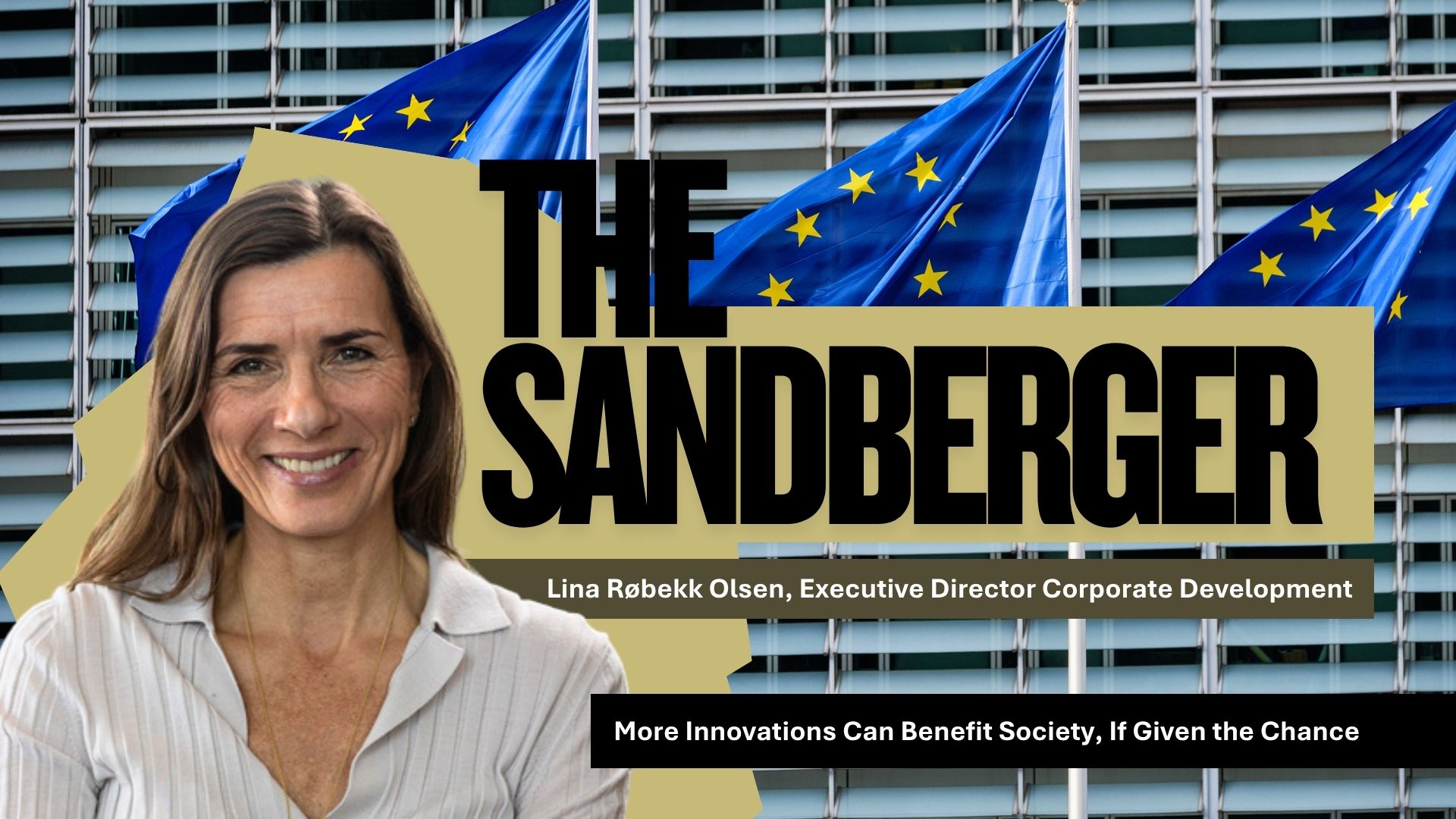
There is no shortage of ideas, innovations, or entrepreneurs in the water sector. Quite the opposite. We have the privilege of working with many of them every day. What has become clear to me, however, is that the challenge of securing water supply in Sweden, Europe, and globally is not primarily about creating more innovations. Rather, it is about ensuring that solutions reach the market and society.
Bridging the Gap Between Research and Commercialization
Water scarcity, flooding, and the demands on more efficient resource management will continue to shape Europe for many years to come. At the same time, we have a unique opportunity. Europe is home to world-leading research, driven entrepreneurs, and a large water industry that is in need of modernization and greater efficiency.
This summer, Sandberg Development, together with several of our partners and water innovation companies, took the opportunity to provide input to the EU’s upcoming strategy on water resilience, research, and innovation. The process also served as a reminder of why we have become so deeply engaged in the water issue over the past several years.
When we examine the water challenge, we see the same pattern emerge time and again. The research exists. The innovations exist. The needs are evident. Yet the journey from research or pilot project to a commercial product remains a long one.
An Ecosystem for Value-Creating Water Innovation
The opportunity to help close this gap was one of the reasons we began thinking beyond individual investments in water-related technologies. Over the past few years, together with researchers, entrepreneurs, universities, and industry partners, we have gradually built a water innovation ecosystem in Malmö and Lund. The ambition has been straightforward: to shorten the distance from idea to business.
Today, this ecosystem includes collaborations with researchers at Malmö University and Lund University, our own incubator for entrepreneurs, active testing environments within our companies, and a growing network of subsidiaries and associated companies working on everything from water treatment and reuse to digital water management and climate adaptation.
This is not only about capital. Equally important is access to knowledge, industrial networks, customers, and opportunities to test and validate solutions in real-world environments. But most encouraging of all is that we can see that the model works.
More Innovations Can Create Societal Value, If Given the Chance
Several companies within our Group have now moved from the start-up phase into expansion. Watersprint has made its UV-LED water purification technology available to customers around the world. Drupps has installed its first large-scale system for recovering water vapor from industrial processes in Mexico. And today, PluvioFlow helps municipalities, property owners, and other stakeholders better understand and manage water flows in a climate that is increasingly affected by extreme weather events.
To me, water resilience is as much about having the courage to invest in, test, and implement new technologies as it is about developing new solutions. When research, entrepreneurship, industry, and investment come together, innovations can become more than just ideas – they can create real value for our society!